Road geotechnics in El Paso forms the critical foundation upon which all successful transportation infrastructure is built. This specialized discipline combines principles of civil engineering and geology to analyze how soil, rock, and pavement materials interact under traffic loads and environmental stresses. In a region characterized by arid climate, expansive soils, and flash-flood potential, understanding subsurface behavior is not optional—it is essential for preventing premature pavement failure, rutting, and costly structural distress. From arterial highways to residential collectors, every road project must begin with a thorough geotechnical evaluation to ensure longevity and safety.
The local geology of El Paso presents unique challenges that directly influence road performance. Much of the area sits on basin-fill deposits composed of sands, silts, and clays interspersed with gravel lenses, often underlain by caliche—a hardened layer of calcium carbonate that can vary dramatically in thickness and strength. Expansive clay soils are prevalent, particularly in the Rio Grande floodplain and surrounding lowlands, where moisture fluctuations cause significant volume changes. These soils exert uplift pressure on pavements, leading to cracking and differential heaving. Additionally, the Franklin Mountains introduce rocky terrain with shallow bedrock, requiring careful excavation planning and specialized compaction techniques for cut-and-fill operations.
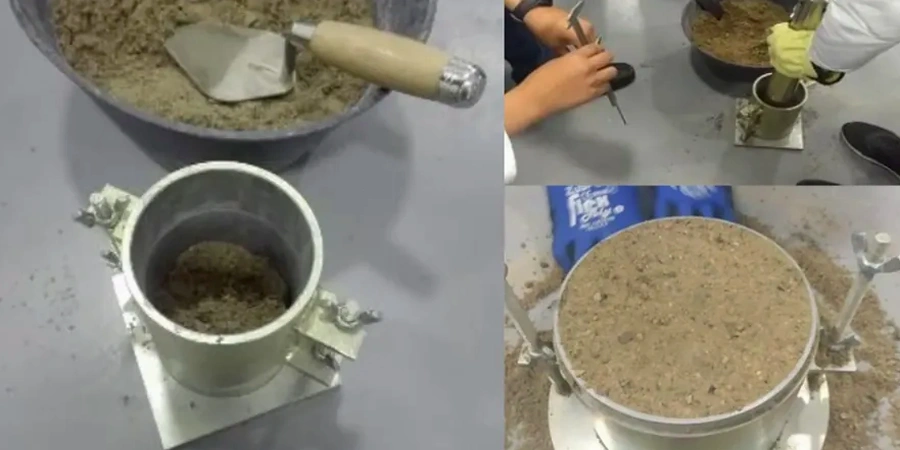
Road design and construction in El Paso must adhere to a robust framework of standards to mitigate these geotechnical risks. The Texas Department of Transportation (TxDOT) governs most projects through its Pavement Design Guide and Geotechnical Manual, which align with AASHTO (American Association of State Highway and Transportation Officials) guidelines. Key specifications include TxDOT Item 132 for embankment materials, Item 247 for flexible base courses, and Test Method Tex-124-E for determining moisture-density relationships. For projects within the city limits, the City of El Paso supplements these with its own Standard Specifications for Public Works Construction, which often mandate specific subgrade treatment protocols, such as lime or cement stabilization, to combat expansive soils.
The scope of road geotechnics extends across a wide variety of project types in the El Paso metropolitan area. Major undertakings like the I-10 Connect expansion or the Border West Expressway demand comprehensive subsurface investigations to support flexible pavement design over deep alluvial deposits. Conversely, industrial park developments and residential subdivisions frequently require rigid pavement design for concrete streets that resist the abrasive effects of wind-blown sand and heavy truck traffic. Prior to any structural design, a detailed CBR study for road design is indispensable for evaluating the bearing capacity of the native soil and determining the required pavement thickness. These services collectively ensure that every road, from a simple overlay to a new freeway, is engineered for the specific conditions of the Chihuahuan Desert.
Quick answers
What is the primary purpose of road geotechnics in pavement construction?
Road geotechnics evaluates the physical and mechanical properties of soil and rock beneath a proposed pavement to ensure a stable, durable foundation. It identifies potential issues like expansive soils, low bearing capacity, or poor drainage, allowing engineers to design appropriate subgrade treatments and pavement structures that prevent cracking, rutting, and structural failure over the roadway's design life.
How do El Paso's expansive soils affect road performance?
Expansive soils in El Paso, rich in montmorillonite clay, swell significantly when wet and shrink upon drying, causing vertical movement that leads to pavement heaving and longitudinal cracking. This cyclic volume change undermines structural integrity, requiring mitigation strategies such as moisture barriers, lime stabilization, or over-excavation and replacement to create a non-reactive subgrade layer.
Which local standards govern geotechnical investigations for roads in El Paso?
Geotechnical investigations are primarily governed by the TxDOT Geotechnical Manual and AASHTO guidelines, supplemented by the City of El Paso's Standard Specifications for Public Works. These documents dictate sampling frequency, laboratory testing methods like the CBR test, and acceptance criteria for subgrade compaction and stabilization, ensuring designs meet regional traffic and environmental demands.
When is a CBR study required for a road project in the El Paso area?
A CBR study is typically required for any new road construction, reconstruction, or major rehabilitation project to assess the strength of the native subgrade soil. TxDOT mandates it for determining flexible pavement layer thicknesses, and local jurisdictions request it for residential and commercial developments to ensure the subgrade can support anticipated traffic loads without excessive deformation.